- Fecha(s): 11/03/2026
- Lugar: Seminario del Departamento de Métodos Cuantitativos para la Economía y la Empresa - Universidad de Murcia
- Ponente: Maryam Daryalal (HEC Montreal)
- Porconfirmar: 1
Se trata de una reunión informativa, en la que la profesora Maryam Daryalal (HEC Montreal) presentará el HEC Montreal, sus programas y los principales grupos de investigación. Hablará también sobre su investigación en el HEC, incluyendo el tipo de problemas que estudia y algunas de sus principales áreas de aplicación. También se explicará el acuerdo…
- Fecha(s): 20/03/2026
- Lugar: Seminario de Métodos Cuantitativos para la Economía - Facultad de Economía y Empresa - Universidad de Murcia
- Ponente: Nicholas Wong

Abstract: Recent research has shown how cycles of globalization and deglobalization can disrupt firms and networks. Understanding this process requires a historical perspective on how firms and networks coordinate, strategize, and respond to the effects of deglobalization. This paper examines firm-level, network-enabled strategic responses to deglobalization by analysing a selection of key firms operating within…
- Fecha(s): 13/02/2026
- Lugar: Seminario del Departamento de Fundamentos del Análisis Económico. Universidad de Murcia
- Ponente: Francisco Alcalá Agulló (IVIE, CEPR)

Abstract: Consumption experiences generate enduring satisfaction (or dissatisfaction) that persists beyond the moment of consumption. This paper analyzes the rational behavior of individuals who anticipate this lasting impact and the cognitive limitations that shape memories–i.e, the peak-end rule, as documented by Daniel Kahneman and coauthors. The peak rule gives rise to non-smooth consumption trajectories characterized…
- Fecha(s): 27/02/2026
- Lugar: Seminario del Departamento de Economía aplicada. Facultad de Economía y Empresa. Universidad de Murcia
- Ponente: Miguel Ángel Casquet (U. Complutense de Madrid)

Resumen: El acceso seguro a la energía es esencial para las economías modernas. Comprender cuán vulnerables son los países ante interrupciones en el suministro energético es fundamental para la formulación de políticas. En las últimas décadas, los sistemas energéticos se han vuelto cada vez más complejos, moldeados por fenómenos como guerras y el aumento de…
- Fecha(s): 06/10/2025
- Lugar: Sala de Seminarios del Edificio Torretamarit (Campus de Elche de la UMH) y online https://meet.google.com/wcp-evhv-rmd
- Ponente: Celia Jiménez-Piqueras (Technical University of Denmark)
- Enlace: https://meet.google.com/wcp-evhv-rmd
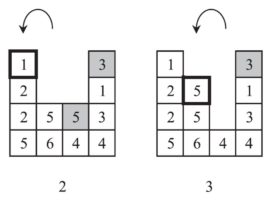
La programación por restricciones o constraint programming es una técnica de resolución de problemas surgida en el ámbito de la programación lógica, que ha demostrado su eficacia en problemas combinatorios difíciles de resolver mediante métodos clásicos como la programación matemática. Destaca especialmente en problemas de secuenciación, asignación, planificación y otros problemas logísticos. En esta charla,…

Women often find themselves in teams that hinder their productivity and earnings. We analyze the role of homophily and gender stereotypes in preferences for team formation and examine the effect of information on changing these preferences. We find that women are expected to perform better in female-type tasks (such as text and emotion-recognition). However, people…
- Fecha(s): 21/03/2025
- Lugar: Sala Seminarios CIO (Se grabará)
- Ponente: Juan Francisco Blázquiz Pulido (IMT School for Advanced Studies Lucca & University of Alicante)

Who’s the deceiver? Identifying deceptive intentions in communication. Recognizing people’s deceptive intentions when communicating is crucial to detect statements that may drive us to unintended harmful decisions. This paper studies individuals’ intentions in games where players can tell the truth with deceiving purposes. In a preregistered experiment, we combine a sender-receiver game with possible strategic…
- Fecha(s): 07/03/2025
- Lugar: Sala Seminarios CIO (Se grabará)
- Ponente: Lorena Garcia Alonso, REGIOlab, Laboratorio de Análisis Económico Regional Dpto. de Economía Aplicada, Universidad de Oviedo
Más de cuatro quintas partes del comercio internacional se canalizan vía marítima, lo que convierte al transporte marítimo en una pieza clave para el correcto funcionamiento de la economía mundial. Del mismo modo, el transporte marítimo no sería posible sin la existencia de la infraestructura portuaria, lo que convierte a estas instalaciones en un elemento…
- Fecha(s): 04/03/2025
- Lugar: Sala de Juntas (1ª planta). Facultad de Economía y Empresa. Universidad de Murcia
- Ponente: María del Carmen Pérez Artés

Resumen: En este seminario se abordará la emigración española a la América colonial hispana entre los siglos XVI y XVIII, con especial atención a la selección de capital humano entre quienes decidieron cruzar el Atlántico. Para medir este capital humano, se emplea el método de age-heaping (o agrupamiento de edades), que permite estimar el nivel…
- Fecha(s): 23/01/2025
- Lugar: Seminario del Departamento de Métodos Cuantitativos (C403). Facultad de Economía y Empresa. Universidad de Murcia.
- Ponente: Eleonora Vitanza. University of Siena, Italy

Abstract: In this paper, we introduce a novel Markovian model that describes the impact of egosyntonicity on emotion dynamics. We focus on the dominant current emotion, and describe the time evolution of its valence, modeled as a binary variable, where 0 and 1 correspond to negative and positive valences, respectively. In particular, the one-step transition…